FAQ
Overview
-
We are faculty from Rutgers Biomedical and Health Sciences who supervise other RBHS faculty while still performing their duties as clinicians, researchers, and educators. We are forming a union to collectively negotiate the terms of our employment with RBHS administration. We are currently not covered by a union we have no voice on important decisions on compensation, terms of appointments, promotion, workload/staffing, and many other issues.
-
This is often confusing. You may have seen language to this effect in your appointment letter. It simply referring to the fact that as it stands now, AAUP-BHSNJ does not represent supervisory faculty.
Your appointment letter, though, is subordinate to New Jersey law, which clearly states supervisors can have their own union.
-
Eligible are RBHS faculty who supervise one level of other RBHS faculty. Our union includes division chiefs, vice chairs, chairs, vice deans, and directors who are still performing their duties as clinicians, researchers, and educators while supervising other faculty.
-
The Rutgers Council of AAUP Chapters is a union representing 10,000 faculty, postdocs, graduate workers, and staff across Rutgers University and Rutgers Biomedical and Health Sciences. The AAUP-BHSNJ, which represents faculty at legacy UMDNJ schools is an autonomous “local” union within this umbrella. The union engages in collective bargaining with the university and hospitals for better wages, benefits, and protections. The unions are affiliated with the American Association of University Professors (AAUP) and the American Federation of Teachers (AFT).
If formed, the RBHS faculty supervisory union may affiliate with the above organizations if the members so desire. It will, though, comply with all requirements for separation of supervisory units.
Process and Protections
-
The authorization is a card or petition signed by you indicating your desire to form a union of RBHS supervisors. You can digitally sign a union card here.
-
Yes. Rutgers administration will not see who signed a card or who has not. Our union will keep such information strictly confidential. The cards will only be shared with Public Employment Relations Commission, the state labor board, to ensure we have enough cards to form a union.
What is collective bargaining and what are the benefits of it? "Collective bargaining is a process, protected by U.S. law, that equalizes the power relationship between employees and their employer.
With collective bargaining Rutgers biomedical supervisory faculty would elect representatives to negotiate on equal footing with the university and hospital administrations and put the terms of our employment into a legally binding contract.
Through collective negotiations over the years, AAUP-BHSNJ has successfully won:
-Substantial pay increases and minimum pay requirements
-A pay equity process
-Professional development funds
-Better matches to retirement
-Relief for PIs from high grant fringe rates
-Protected Clinical Collections from being unfairly taken (NJMS)
Note that also collective bargaining protects members from negative employment conditions as well. This is because all new work rules have to be bargaining with our union. For instance, in one department the Administration unilaterally removed professional development reimbursement and wrongfully kept money belonging to the faculty. Our union protested and these changes were reversed. Had there not been a union, the chair would have succeeded in making changes.
-
Collective bargaining is a process, protected by U.S. law, that equalizes the power relationship between employees and their employer.
With collective bargaining Rutgers biomedical supervisory faculty would elect representatives to negotiate on equal footing with the university and hospital administrations and put the terms of our employment into a legally binding contract.
Through collective negotiations over the years, AAUP-BHSNJ has successfully won:
-Substantial pay increases and minimum pay requirements
-A pay equity process
-Professional development funds
-Better matches to retirement
-Relief for PIs from high grant fringe rates
-Protected Clinical Collections from being unfairly taken (NJMS)
Note that also collective bargaining protects members from negative employment conditions as well. This is because all new work rules have to be bargaining with our union. For instance, in one department the Administration unilaterally removed professional development reimbursement and wrongfully kept money belonging to the faculty. Our union protested and these changes were reversed. Had there not been a union, the chair would have succeeded in making changes.
-
Faculty supervisors form a committee across schools to understand workplace issues and make a plan to form a union.
A majority of all faculty supervisors sign union authorization cards indicating they want to unionize with the Rutgers Biomedical Supervisors Union.
Our union files a petition to unionize with the New Jersey Public Employment Relations Commission, our state labor board.
An elected committee negotiates a contract with the Rutgers administration.
Remember, you are the union: all union members will have the opportunity to vote on any union contract.
-
First, Rutgers administration will not know you signed your union card since it is not shared with them, as per above.
Second, under both New Jersey and federal labor law, Rutgers cannot interfere with you and your colleagues forming a union, discourage your from joining, or retaliate against you. Should you be asked a Rutgers administrator about our union’s formation, it is your right to reply, “I do not have to answer that question,” and you are strongly encouraged to let union organizers and staff know about any such conversation.
Additionally, unions have strength in numbers. Practically speaking, it would be quite difficult for the Rutgers administration to retaliate against all the faculty leaders who perform crucial work leading the university and hospitals each and every day.
After Unionizing
-
You will still have an individual appointment letter and the ability to individually negotiate most items you negotiate now.
A union contract—known as a “collective negotiations agreement”—sets a floor, not a ceiling. Collective negotiating does not completely eliminate individual bargaining for RBHS faculty. For example, faculty can ask for and receive an out-of-cycle raise or ask for changes to their appointment letter The union contract provides opportunities and flexibility for these situations.
The purpose of faculty supervisors coming together to unionize is to secure our benefits in a union contract and to negotiate for improvements to pay, benefits, and working conditions. Right now, without a union, only our appointment letters outline our benefits as supervisors—we have none of the basic protections of a legally-binding union contract. Our positions and the conditions surrounding our positions can change at any time because Rutgers can currently unilaterally make decisions concerning our appointments.
The Rutgers AAUP unions (both biomedical and academic), from July 1, 2023 to today have won union rights for 567 faculty in the academic clinical, teaching, and research workforce. Not a single one of these employees has seen a reduction in their salary or benefits—only gains from union representation.
-
Membership dues are important because they provide the resources necessary for effective representation. As part of the AAUP, we will not pay dues until we have gone through the bargaining process and voted democratically to approve our first contract.
Dues are critical for providing us with independent resources to improve our working conditions. We use them to ensure we have appropriate legal, bargaining, and staff support to represent all biomedical faculty supervisors. Dues are an affordable rate of 0.75% of monthly income and capped at high salaries. They are typically $60 to $70 a pay period.
-
No: a union will never force you to go on strike. Successful collective action at work—like petitions, rallies, or withholding labor—gets its power from voluntary participation! And we of course have a responsibility to patients and essential research, which we would always consider when organizing any kind of collective action.
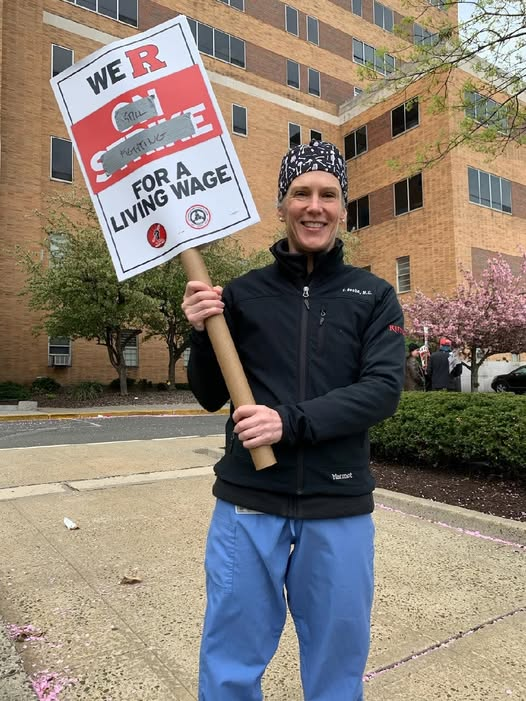
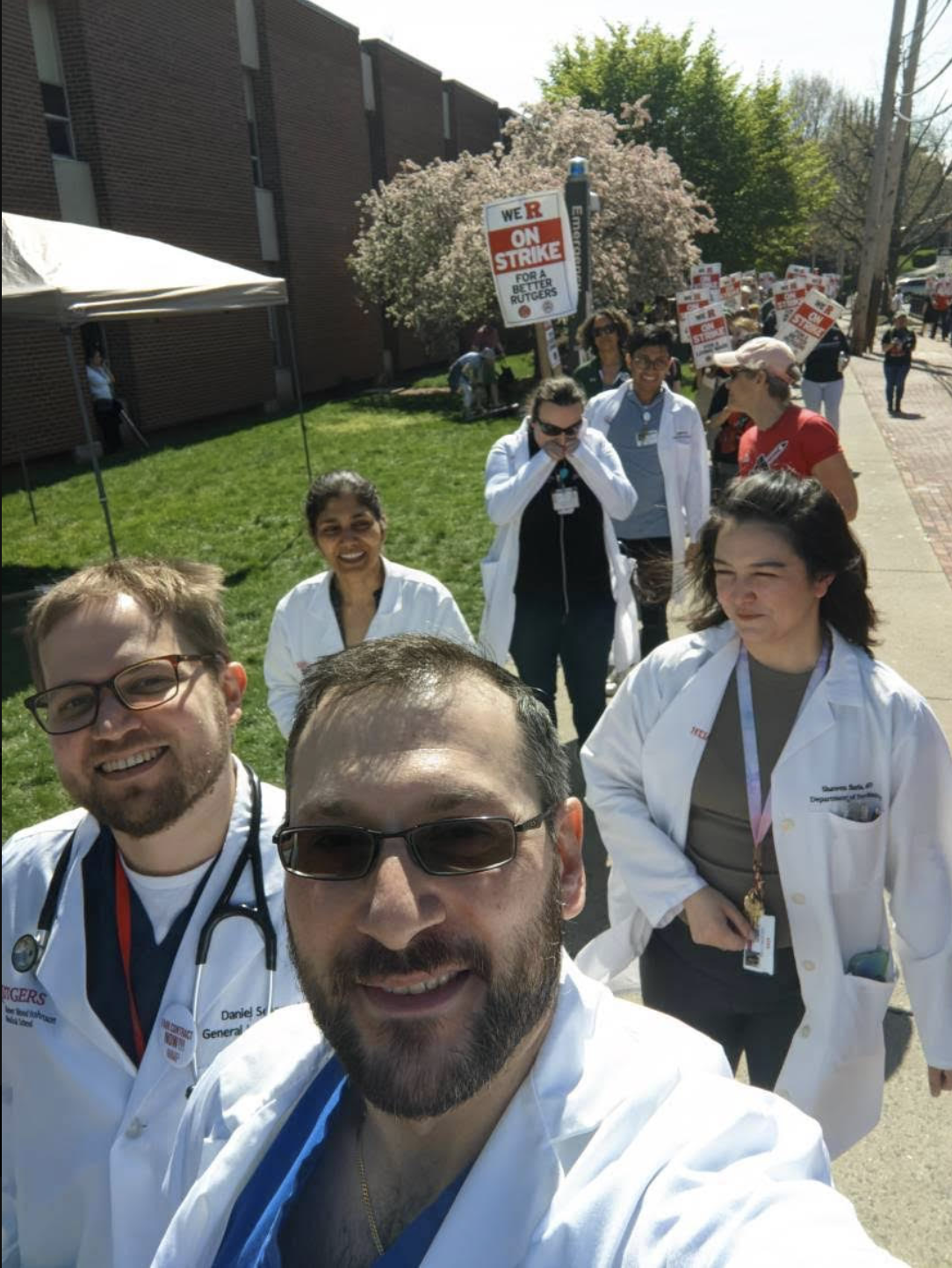
Formal strikes are rare, happening in very few contract negotiations. They are decided democratically by the union membership through a vote. A strike is a tactic of last resort and requires a lot of preparation to happen and to succeed. In its 52 years of existence as a faculty union, the Rutgers faculty union has only had one strike authorization vote (with 95% voting in favor of authorization in March 2023) and one strike, lasting five days, from April 10–14, 2023. Physicians did not strike patient-facing duties, but rather refused to perform teaching and administrative/service work. Essential research also continued.
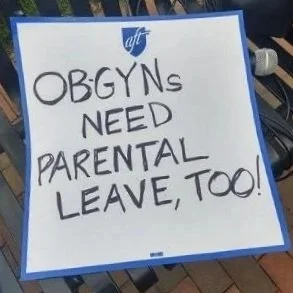
The net result of the strike was a minimum pay increase of at least 14% across four years; longer employment contract appointments; increases in parental leave; paid time off for less-than-full-time faculty; tenure protections; a system to address salary inequities; and minimum take-home pay pegged to the American Association of Medical Colleges (AAMC) annual salary benchmarks, which yielded significant pay increases for many healthcare faculty.